Facial telangiectasia
Do you have red veins on your cheeks or nose? We'll make them look much less noticeable.
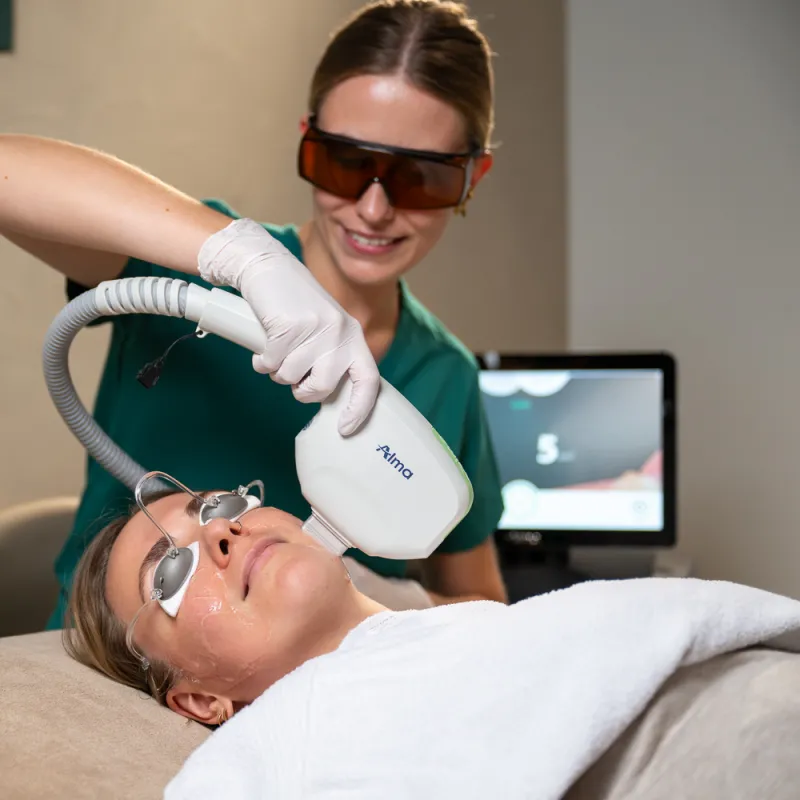
You notice them right away: fine red lines on your cheeks, around your nose, or on your chin. You try to cover them up with makeup, but they stay. And when it’s cold, hot, or after a glass of wine, they seem even more noticeable. At our clinics in Enschede and Zwolle, an experienced skin therapist targets rosacea with light that acts precisely on the blood vessels.
What is rosacea? Here's how to recognize it.
With rosacea, small blood vessels just beneath your skin remain dilated. You can see them as thin red or purple lines, especially on your cheeks, the sides of your nose, and your chin. This condition is commonly referred to as “broken capillaries.” Genetic predisposition, sun exposure, extreme temperature fluctuations, hormones, and the natural aging of the skin all play a role.
Rosacea does not go away on its own. With the right treatment, however, it does become noticeably less severe.
We are affiliated with:



Why Choose Smooth?
Couperose behandelen vraagt om kennis van vaatjes en van licht. Onze huidtherapeuten stemmen de behandeling af op de dikte en kleur van je vaatjes en op je huidtype. Je krijgt een eerlijk beeld van wat haalbaar is, vooraf een duidelijk plan en begeleiding tot je tevreden bent met het resultaat.
Your broken capillaries call for a targeted approach.
How long have you had the visible blood vessels? Do they get worse in winter or after a day in the sun? Do you also have bumps, a burning sensation or a flushed complexion? We examine your skin carefully. That way, we know whether it’s broken capillaries or something more, such as rosacea. Then we choose the right treatment and discuss how many sessions you can expect.
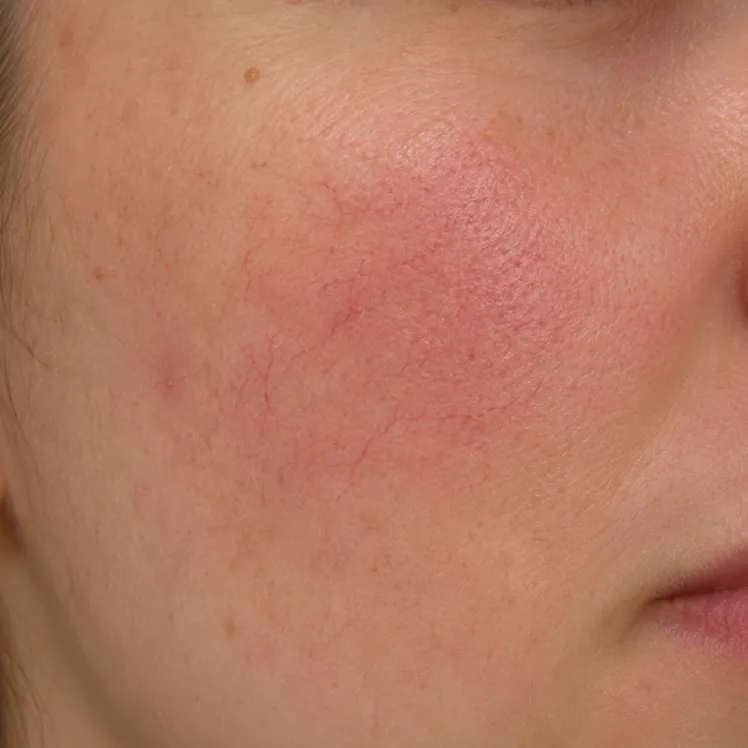
Facial telangiectasia: before and after.
These photos show clients’ skin before and after a series of light treatments for red, visible blood vessels. With each photo, you can read how many sessions it took and how much time there was between them. Every skin responds in its own way.
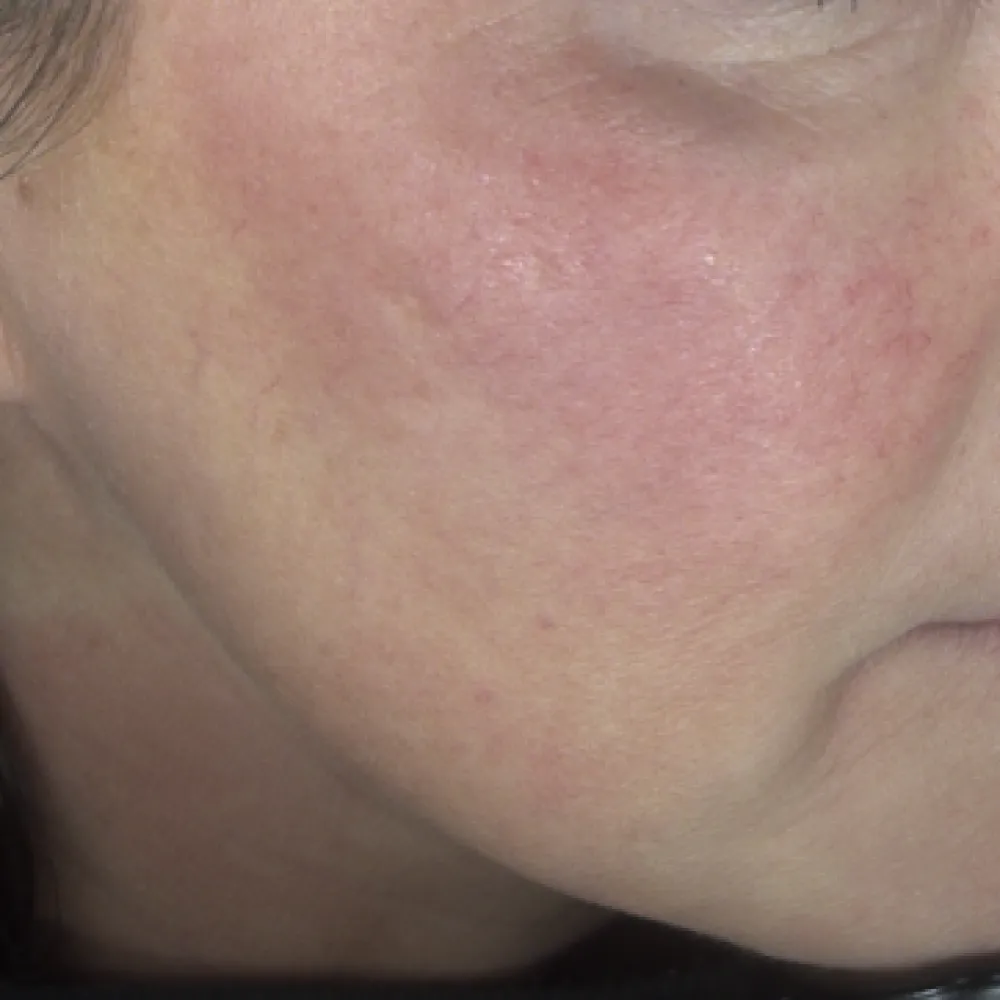
Before
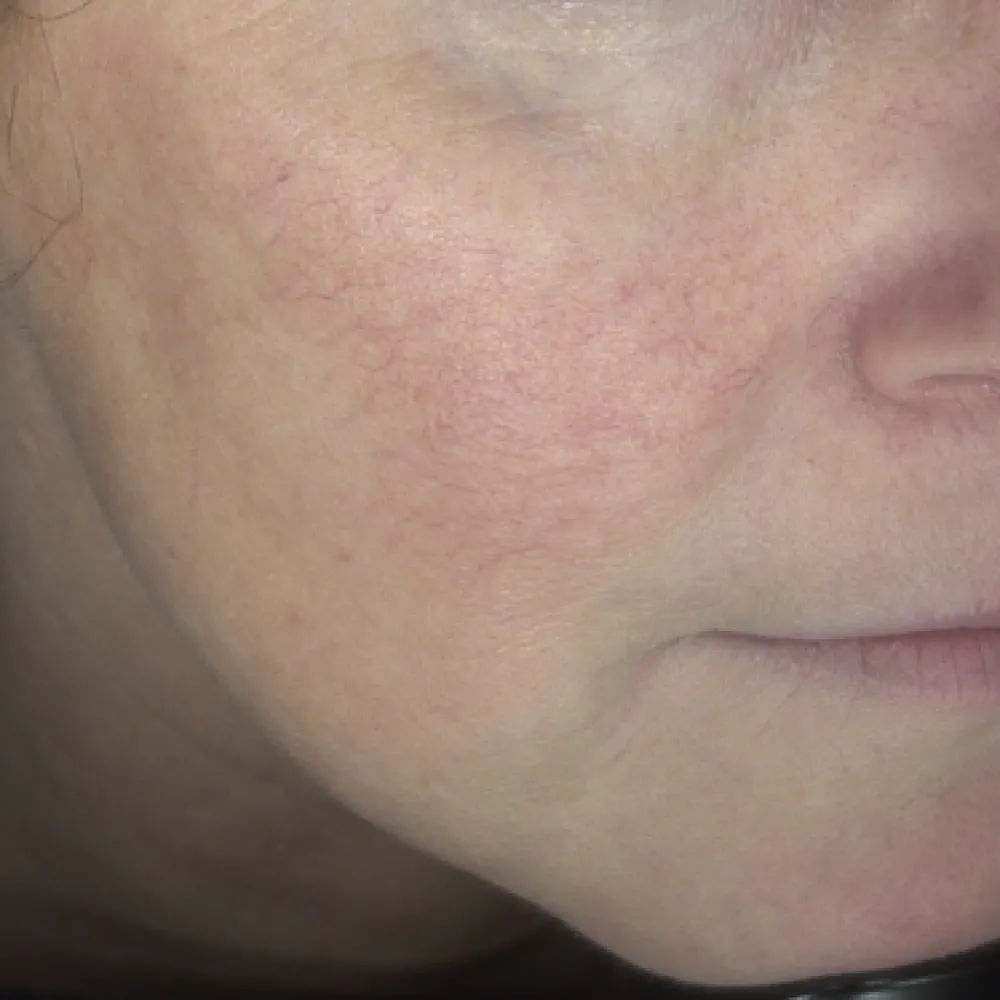
After
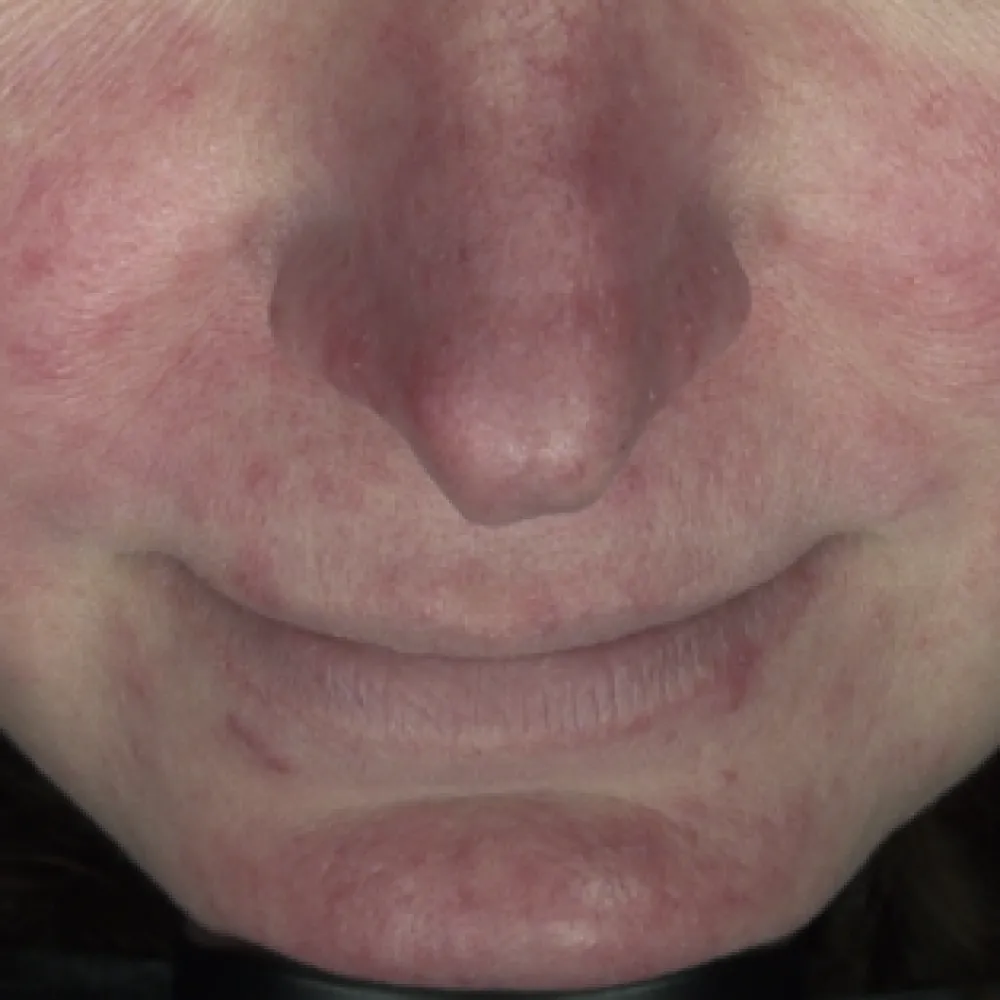
Before
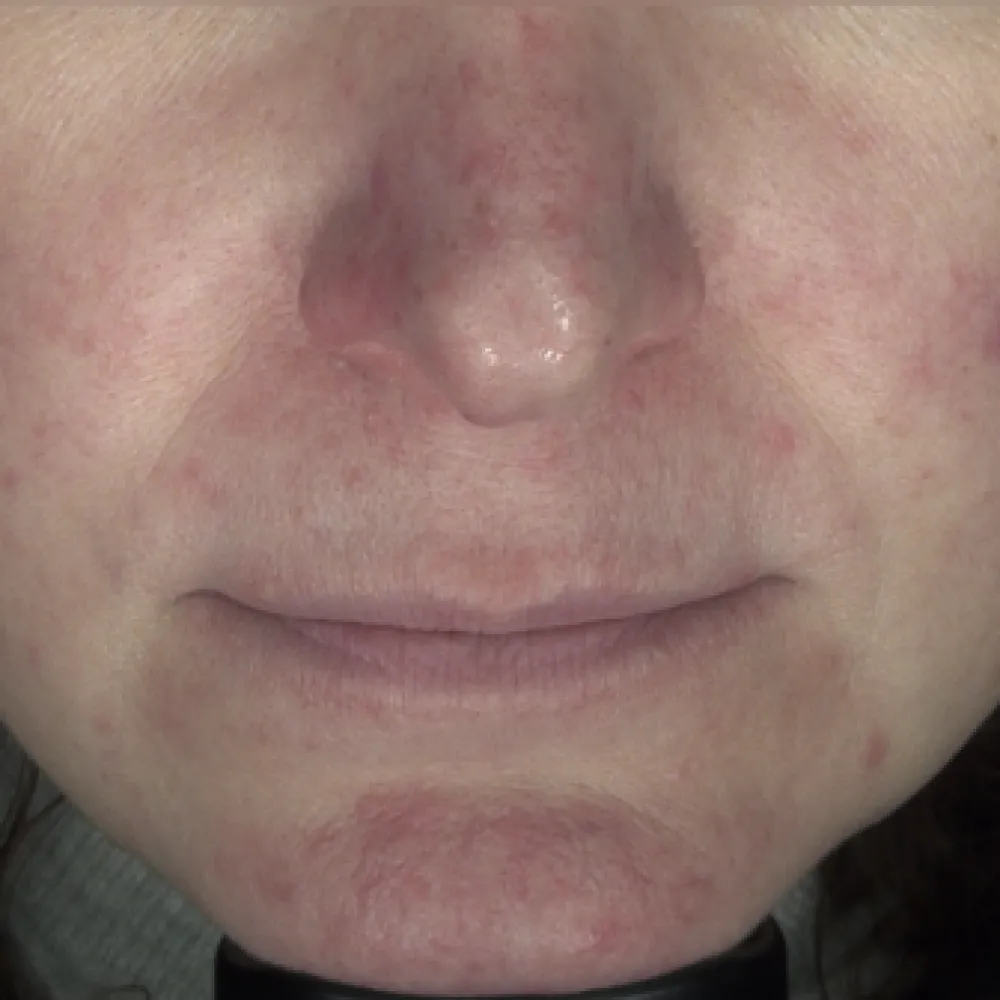
After
OUR APPROACH.
Treating broken capillaries is a step-by-step process. We start with an assessment, treat the blood vessels in a few sessions and show you how to protect your skin afterwards. That way, you know exactly what to expect.
During the free skin consultation, the skin therapist assesses where the blood vessels are, how thick they are and how your skin responds. She asks about your health, any medication you take and what makes the redness worse. That way, she knows whether you have broken capillaries or whether something else is going on.
You’ll receive a plan with the number of sessions and the costs. Avoid the sun and sunbeds for a few weeks before treatment. Do you use self-tanner or products that make your skin more sensitive to light? Let us know, so we can take that into account.
We protect your eyes and cool your skin. Then we treat the blood vessels with short flashes of light. It feels like a warm tap. Right after treatment, the blood vessels may look darker and your skin may be slightly red or swollen. This usually settles within a few days.
In the weeks after treatment, apply a high SPF every day. Avoid hot showers, saunas and strenuous exercise for the first few days. A treated blood vessel usually doesn’t come back, but new ones can develop. That’s why we discuss how to protect your skin in the long term.
Our technology
For broken capillaries, we use the Harmony XL Pro. Its light is absorbed by the red pigment in your blood vessels and leaves the surrounding tissue untouched. We adjust the settings to the thickness and colour of your blood vessels and to your skin type.
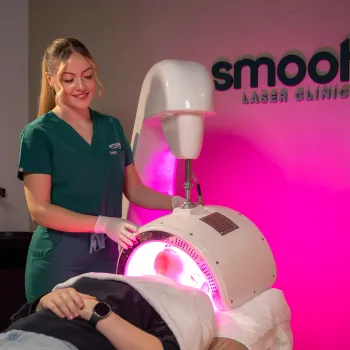
Want to calm your skin between treatments? Dermalux LED therapy can be a good addition. Your skin therapist will advise you on what suits you.
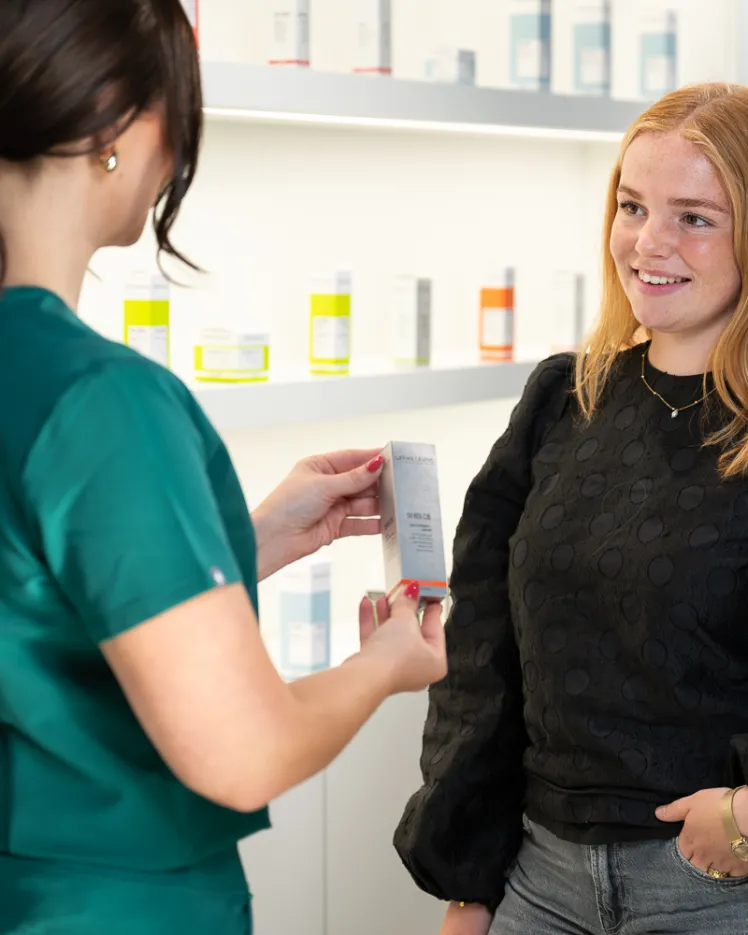
FREE SKIN CONSULTATION.
Discover what your skin needs. Our skin therapist listens to your wishes, analyses your skin with the OBSERV 520X and gives you honest advice on suitable treatments and the results you can expect.
Smooth Facts.



Is treatment for broken capillaries covered by insurance?
If the skin therapist diagnoses broken capillaries, your supplementary health insurance may reimburse part of the cost. The amount and conditions vary per insurer. Basic health insurance does not cover treatment for broken capillaries. Check the conditions in advance, and ask whether you need a referral from your GP. Reimbursement is never guaranteed.






Book an appointment.
You’ll discuss your skin with a skin therapist. With the OBSERV 520X, we do a skin scan that shows what’s happening beneath the surface. That way, you know exactly which treatment works for you. The consultation is free and takes place in Enschede or Zwolle.